Your snoring may be revealing a hidden risk most people overlook…
until it’s too late.
If your nights have turned into a battle — the shaking, the nudging, the constant “turn over!” — you’re not alone.
Millions of Americans are exhausted from snoring that cuts through walls, ruins sleep, and slowly drains patience, intimacy, and mood.
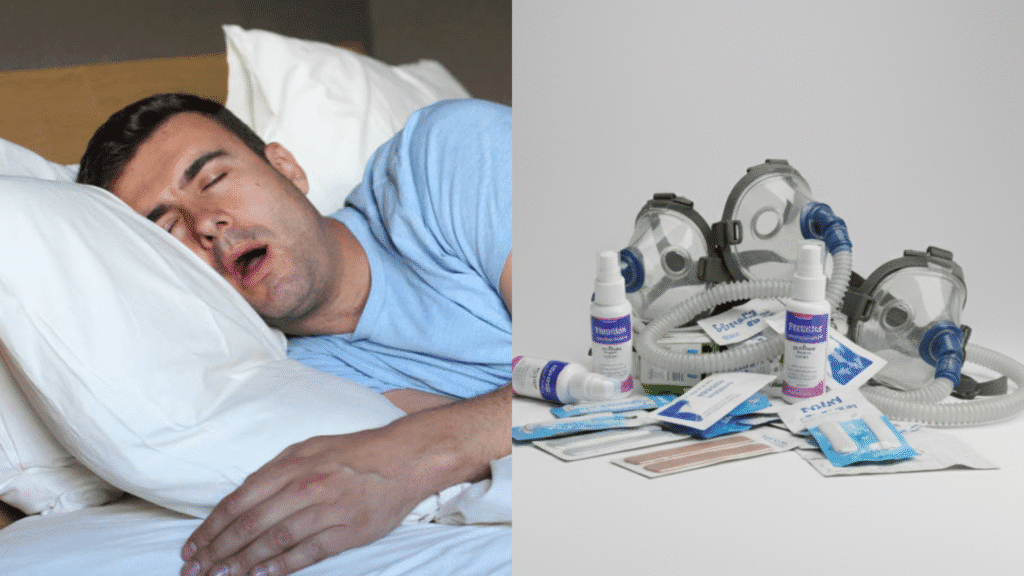
You may have tried strips, sprays, mouth guards, or even considered the intimidating CPAP mask…
Yet nothing really changed.
And every morning, the same routine:
You wake up tired, embarrassed, and frustrated — while your partner wakes up resentful and drained.
And if you’ve been living this cycle for a while, you’ve probably noticed it’s not just about a noisy night anymore.
It starts showing up in small ways throughout your day — little signs that something isn’t right:
Waking up groggy, drained, or with that heavy “fog” that follows you all day
Feeling embarrassed when your partner mentions the noise — or guilty for keeping them awake
Noticing more headaches, dry mouth, or tension in your throat when you wake up
Snapping at people you love because you’re exhausted and running on low patience
Sensing your partner getting resentful, sleeping farther away, or leaving the room altogether
Feeling afraid the problem is getting worse — and worried about where this could lead
When this becomes your nightly reality, snoring stops being a “sleep issue” and becomes something that affects your mornings, your mood, and your relationship.
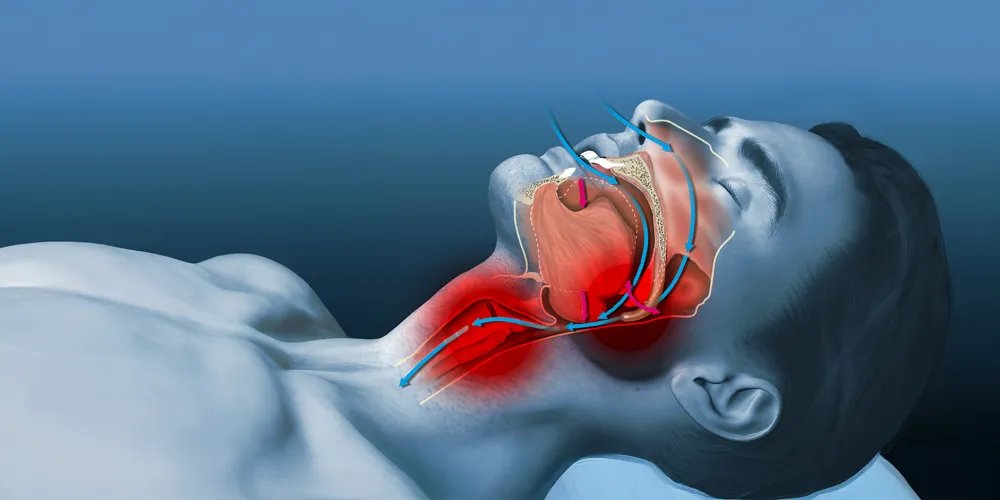
Snoring is often treated as “just an annoyance,” but sleep medicine shows it’s usually a sign of something deeper. When your airway partially collapses during sleep, the oxygen reaching your brain and body drops, forcing your system to work much harder than it should.
Less oxygen reaching the brain
Your brain switches into a repeated “keep breathing” mode.
Your heart working harder
The cardiovascular system compensates for restricted airflow.
Nighttime blood pressure rising
Frequent snorers often experience elevated nighttime blood pressure.
Long-term cardiovascular strain
Repeated drops in oxygen stress the heart and blood vessels over time.
Fragmented, shallow sleep
The body gets pulled out of deep, restorative stages again and again.
Daytime exhaustion and irritability
You “sleep all night,” but wake up feeling like you barely rested.
Snoring shouldn’t be ignored. For many people, it’s an early sign that the body is under strain — and needs support at night.
Here’s the truth:
Snoring rarely disappears with nose strips, $10 gadgets, or “quick fixes.”
Because the real issue usually isn’t in your nose.
It starts in your neck — and the way your throat collapses while you sleep.
This is why so many treatments fail before they even begin.
“I thought snoring was just an annoying habit… until I realized it could cost me my health — and the woman I love.”
I always knew I snored, but I never thought it was a real problem. Not until I started noticing my wife becoming more distant… more exhausted… and more frustrated with me every night.
She kept saying she couldn’t sleep. I honestly thought she was exaggerating.
Until the morning I woke up and she wasn’t in bed. She was on the couch, dark circles under her eyes, and she said:
“I can’t keep doing this… I’m reaching my limit.”
That hit me harder than anything.
And the truth is, I had been feeling strange for a while: waking up with a dry mouth, headaches, feeling drained no matter how early I went to bed… and sometimes jolting awake gasping for air.
That’s when the fear kicked in. Fear that something was seriously wrong. Fear that I was heading toward a CPAP machine. Fear that this “harmless snoring” was actually hurting my health… and worst of all — hurting the woman I love.
That’s when it finally clicked: snoring wasn’t “just noise.” It was a warning sign. Something that was destroying our nights, our mornings… and possibly my well-being.
I needed to fix it. And fast.
Recent findings in sleep medicine have highlighted something critical — and often overlooked:
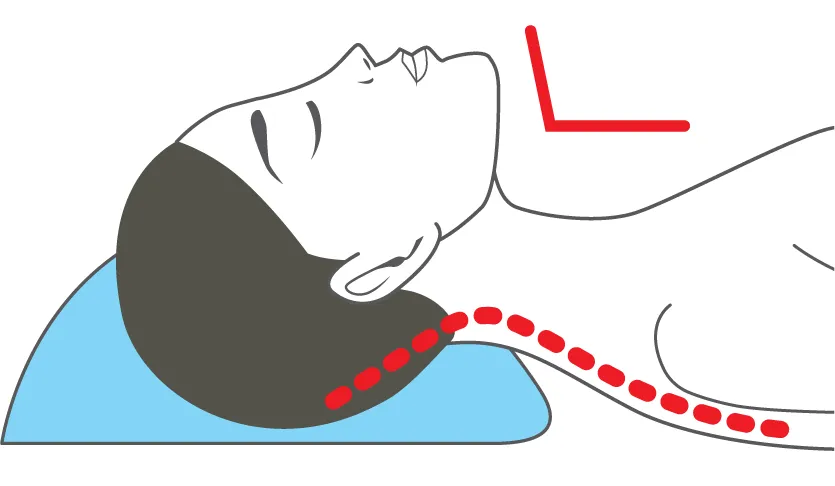
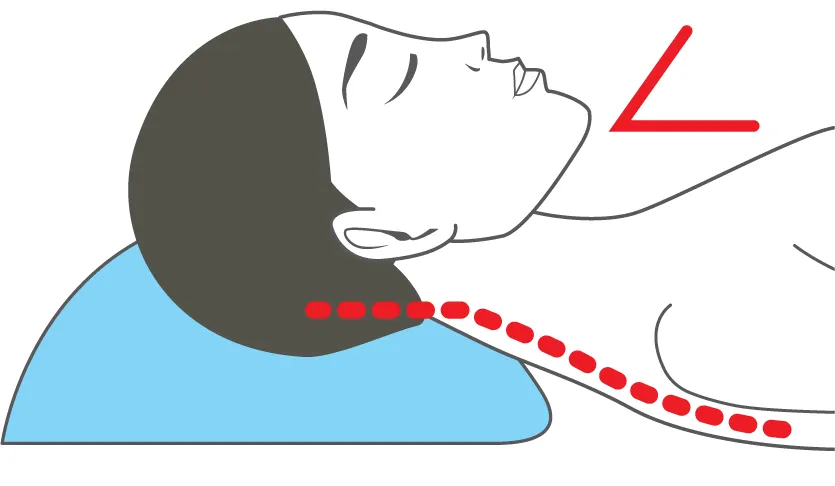
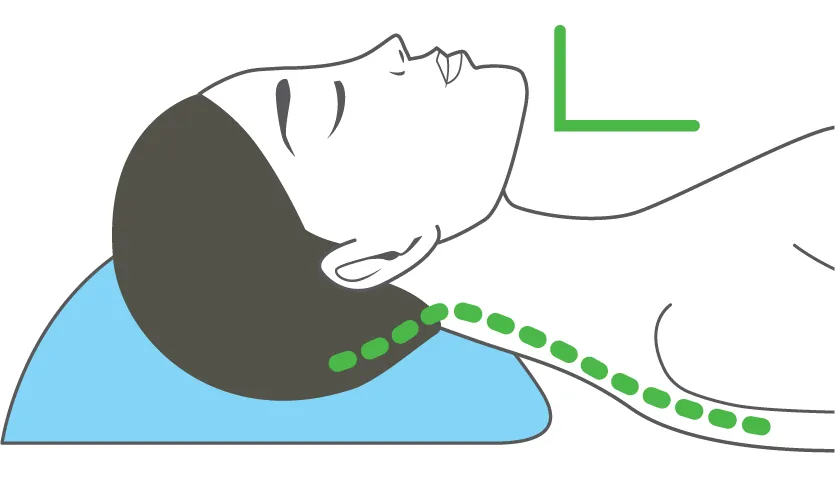
the position of your head and neck during sleep has a direct impact on upper-airway collapse, which is one of the main physiological triggers behind snoring.
As noted across multiple publications in sleep research, “head and neck position significantly affects upper-airway patency during sleep.”
When the cranio-cervical angle is misaligned, the soft tissues of the throat tend to collapse more easily, forcing airflow through a narrowed space — creating the loud vibration we know as snoring.
Positional therapy has been recognized for years as a first-line, non-invasive method for improving airflow:
“Adjustments in the cranio-cervical angle can decrease pharyngeal collapsibility and improve airflow stability throughout the night.”
This helps explain why so many quick fixes fail.
Strips, sprays, and mouthpieces target the nose or jaw — but the real issue often starts deeper in the airway.
And the part most people never hear?
You don’t need machines.
You don’t need mouthpieces.
You definitely don’t need surgery.
Numerous observational reports have shown that “even minimal postural support can lead to measurable improvements in airway vibration and snoring intensity.”
Many people — and many couples — experience quieter nights simply by supporting the airway in a healthier alignment.
Why does this matter?
Because once you understand the real mechanism behind snoring, the solution becomes far more intuitive:
Support the airway… and the noise finally has a chance to calm down.
And that’s exactly the physiological principle this approach is built upon.
In practice, proper cranio-cervical alignment often translates into results like:
What Real People Experienced After Trying This Approach
“Before You Even Consider a Breathing Mask or Surgery… Try This First.”
Many people jump straight to extreme solutions — CPAP machines, bulky masks, or invasive procedures — without realizing the root of their snoring often comes from head and neck alignment.
If your airway collapses at the wrong angle, no strip or spray will fix it.
Before going down the medical route, there’s a far simpler, non-invasive step you can try at home.
A Simple Way to Apply the Positioning Method
This ergonomic approach gently guides your head and neck into a healthier alignment, helping reduce airway collapse and nighttime noise — naturally.
People choose this solution because it’s:
LIMITED-TIME OFFER (Up to 70% Off)
Right now, the official page for this ergonomic solution is offering a special discount of up to 70%.
Click the button below to go directly to the official website, where you can see available options and the current promotion.
No subscriptions. No hidden commitments.
Just the official discount, available for a limited time.
Clicking will take you to the official page, where you can see all options and the current limited-time discount.